
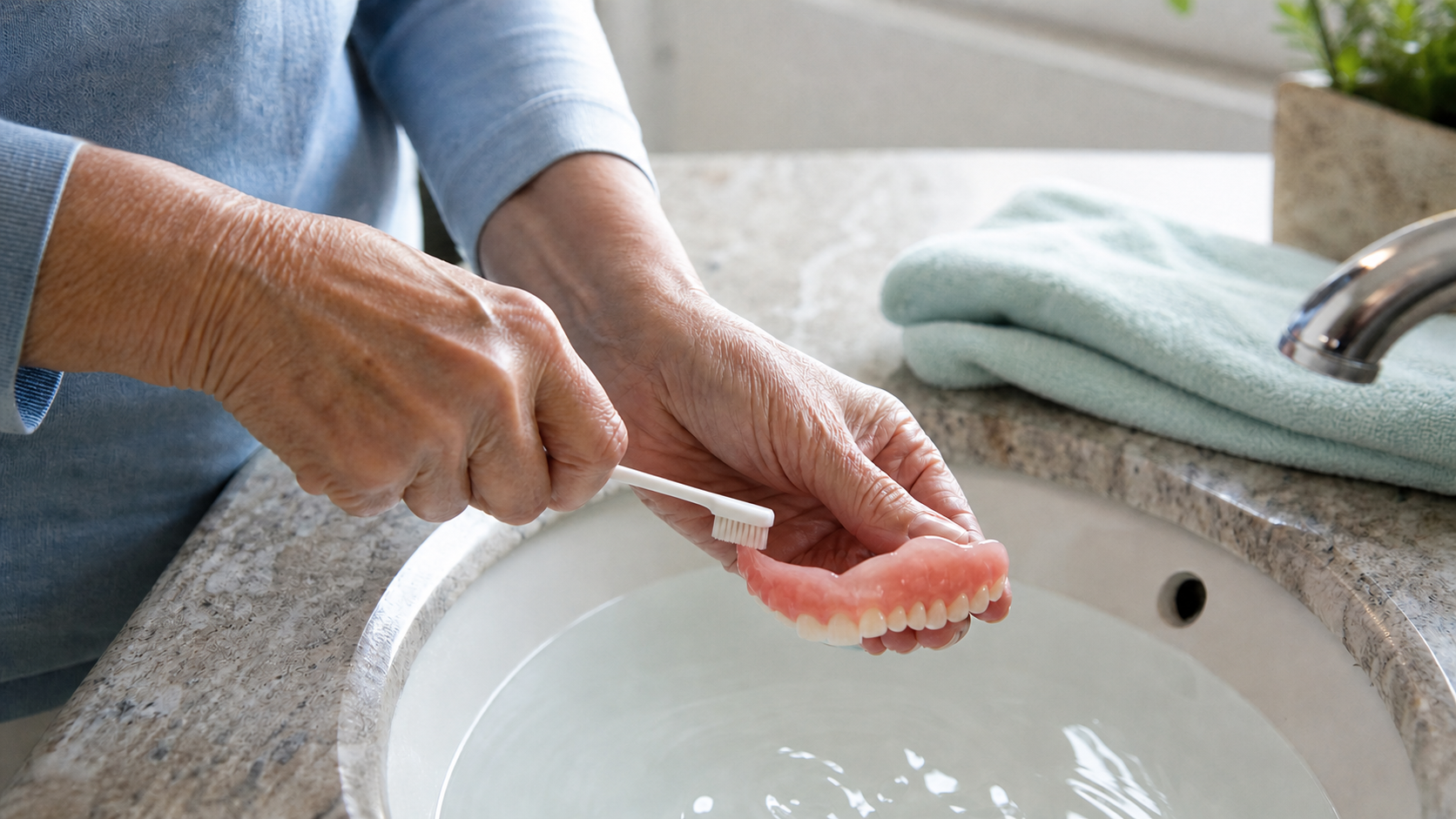
Knowing how to care for dentures comes down to cleaning them every day, soaking them overnight and handling them gently. Rinse them after meals, scrub them gently using a soft brush with mild soap or a product made for dentures, and never use toothpaste, household cleaners or hot water. At White Dove Dental in Milton, every denture patient gets cleaning and storage instructions.
Five Minutes a Day Keeps Your Dentures Fresh
- Give your dentures a daily clean, the same as natural teeth, to stop plaque, stains and bad breath
- Use a soft brush with denture cleaner or mild soap, never regular toothpaste or household cleaners
- Take dentures out overnight and store them wet so they hold their shape
- Skip hot water, household cleaners and regular toothpaste, which the CDA says should not be used on dentures
- Care for your gums and any natural teeth while your dentures are out
- See your dentist regularly so fit, cracks and gum health are checked over time
New dentures can feel like a big change, and most people have questions about how to look after them. Learning how to care for dentures properly protects your investment, keeps your mouth healthy and helps your dentures look natural for longer. At White Dove Dental on James Snow Parkway in Milton, we walk every denture patient through a routine that fits into real life.
This guide covers daily cleaning, overnight soaking, safe storage, what to avoid, and when your dentures need a check. Whether you wear a full set, a partial or implant-supported dentures, the same basic habits apply.
Why Daily Denture Care Matters
Dentures are not alive, but the mouth they sit in is. Food, bacteria and plaque stick to dentures the same way they stick to natural teeth.
According to the Canadian Dental Association, full and partial dentures alike need a daily clean. Without it, plaque and tartar build up and can cause stains, bad breath and gum problems. Plaque on a partial denture can also spread to your remaining natural teeth, leading to gum disease and cavities.
Good care does three things:
- Keeps your mouth and gums healthy
- Keeps your dentures fresh, clean and natural-looking
- Helps your dentures keep their shape and fit, which affects comfort when you eat and speak
How to Clean Dentures Properly in Six Steps
If you have ever wondered how do you clean dentures without damaging them, the answer is simpler than most people expect. Here is how to clean dentures properly each day, based on CDA guidance:
- Take them out and rinse. Run your dentures under water to wash off loose food.
- Wet a soft brush. Use a denture brush or a regular soft-bristled toothbrush.
- Apply a gentle cleaner. Mild soap works, or choose a cleaner made for dentures.
- Brush every surface gently. Include the inside that sits against your gums and the area under any clasps, where bacteria collect.
- Avoid bending or scratching. Go easy on the plastic and on any metal attachments.
- Rinse well before wearing. Rinse in clean water before you put them back in.
Knowing how to clean dentures is only half the job. Doing it every day, ideally after meals and before bed, is what keeps buildup from settling in.
Handle Dentures Over a Towel or a Sink of Water
A dropped denture can crack, and squeezing it too hard can bend it. Clean yours over a sink with a few centimetres of water in it, or lay a folded towel underneath, so a slip ends in a soft landing.
Look for Cracks While You Clean
Daily cleaning is a good time for a quick check. If you spot damage, such as a crack, a chipped edge or a tooth that moves, do not try to glue or fix it at home. Bring it to your dentist for repair.
How to Wash Dentures Without Damaging Them
Many people ask how to wash dentures with products they already have at home. Some common products do more harm than good. The CDA advises against:
- Regular toothpaste: it is too abrasive for dentures
- Household cleaners: these are too harsh for dentures
- Hot water: never soak dentures in hot water
A soft brush, cool or lukewarm water and a cleaner made for dentures are all you need. If you are unsure whether a product is safe for your dentures, ask us at your next visit.
How to Care for Dentures Overnight: Soaking and Storage
An important part of denture care is giving your mouth a rest. The CDA recommends removing dentures overnight so your gums and tissues can recover. At our clinic, we tell you whether your own dentures should come out overnight, because for some types, removing them at night helps the tissues stay healthy.
While they are out:
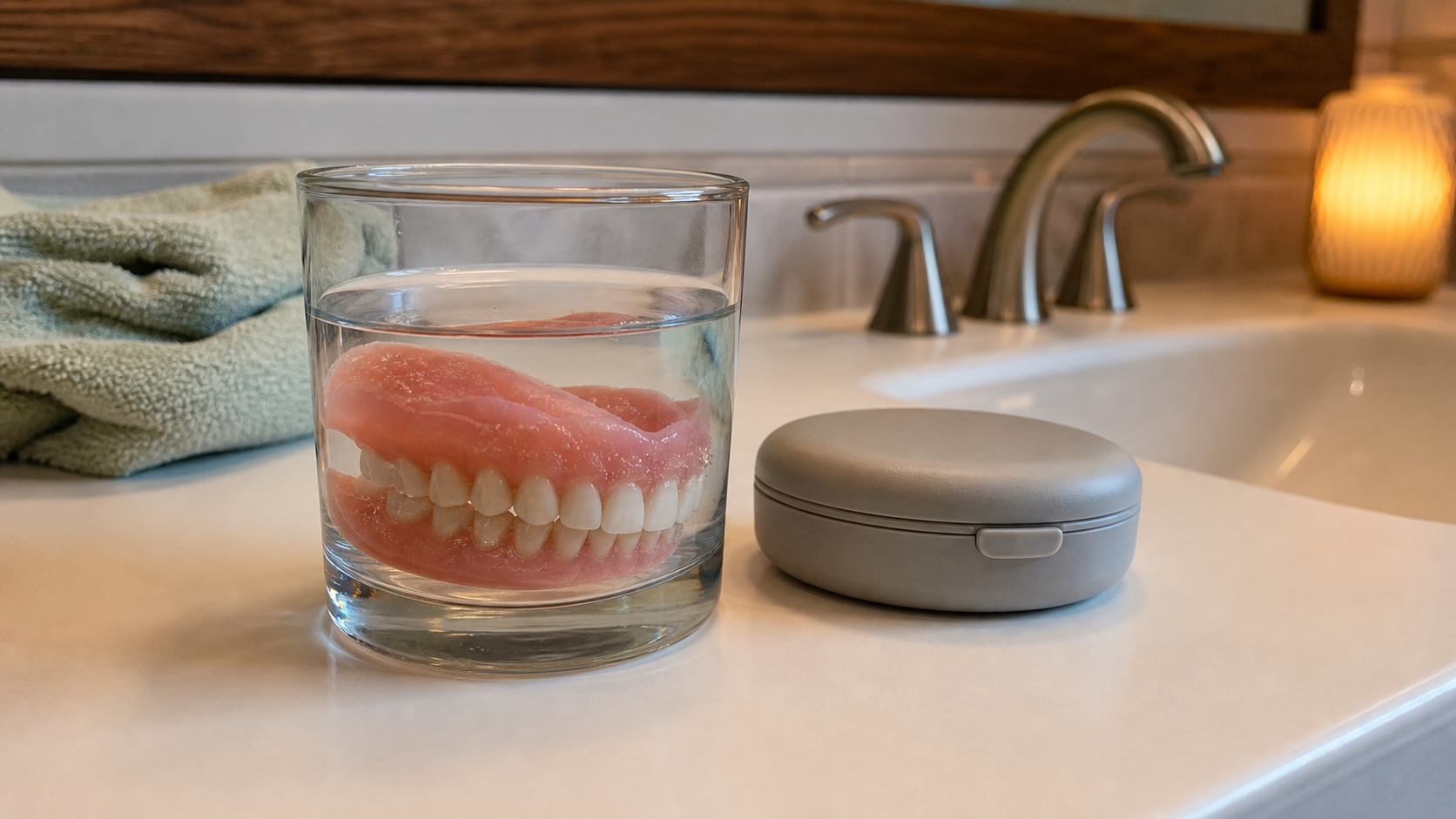
- Place them in warm water, adding a denture soak if you like
- Use only warm water if your dentures have metal clasps, since other solutions may discolour the metal
- Keep them in water whenever you are not wearing them, to stop them drying out and warping
- Store them in a covered case out of reach of children and pets
A small habit, like placing the denture case next to your toothbrush, makes it easier to remember every night.
How to Sanitize Dentures Safely
People often search how to sanitize dentures after a cold, or when a denture starts to smell. Daily brushing and overnight soaking with a denture cleanser are the safest way to keep bacteria down.
Do not use household cleaners or regular toothpaste, which the CDA says are too abrasive for dentures, and never soak them in hot water. If your dentures still smell after careful cleaning, or if you notice a coating that does not come off, book a visit so we can check both the dentures and your gums.
Do Not Forget Your Gums and Natural Teeth
Denture care also includes the mouth underneath. While your dentures are out, the CDA suggests:
- Gently cleaning and massaging your gums
- Softening your toothbrush under warm water if it feels rough, or using a clean damp cloth wrapped around a finger
- Brushing your natural teeth with a soft-bristled toothbrush and flossing every day if you wear a partial denture
If you are considering a partial, our page on partial dentures in Milton explains how they work alongside your remaining teeth.
Healthy gums support a better fit. Sore spots, redness or swelling under a denture are signs it is time for a check.
How to Care for Dentures of Different Types
The routine is similar for every type, with a few extra points:
- Full dentures: clean all surfaces, including the part that rests on the roof of your mouth or lower gums
- Partial dentures: clean carefully around clasps and keep up with brushing and flossing your remaining teeth
- Flexible partial dentures: use a soft brush and a gentle cleaner, and ask us which soaking products suit the material
- Implant-supported or snap-on dentures: clean the denture and also the area around the implants, following the instructions we give you
At White Dove Dental, we offer partial dentures, flexible partial dentures, conventional full dentures and implant-supported or snap-on dentures in Milton. Each comes with cleaning and care instructions for that specific type. You can compare the options on our dentures in Milton page.
Adjusting to Life With Dentures
Daily care also covers how you live with your dentures. There is an adjustment period, especially with eating and speaking. We give guidance on both and discuss whether a denture adhesive makes sense for you.
A few tips that help in the first weeks:
- Start with softer foods cut into small pieces
- Chew slowly, using both sides of your mouth
- Read aloud at home to get used to speaking with your dentures
- Use adhesive only as directed, and clean it off fully each day
Follow-up visits for adjustments are a normal part of wearing dentures, so sore spots can be eased instead of tolerated.
When to See Your Dentist About Your Dentures
Even with perfect cleaning, dentures change over time, and so does your mouth. Bone and gum changes can slowly affect the fit, and dentures may need maintenance or a reline to stay comfortable.
The CDA notes that poorly fitted dentures can cause sores that make oral cancer harder to spot. That is one more reason regular visits matter. At White Dove Dental, exams are typically recommended every 6 to 9 months, with the frequency based on your oral health needs, and every dental exam in Milton includes an oral cancer screening in Milton.
Book a visit sooner if you notice:
- Dentures that feel loose, rock or click when you talk
- Sore spots, redness or swelling on your gums
- Cracks, chips or a broken clasp
- Changes in your bite or difficulty chewing
With good care, dentures typically last 10 to 15 years. Regular checks help you get the most from them and plan replacement before problems start.
FAQs About Denture Care
Want a Denture Routine That Fits Your Smile?
Not sure if you are cleaning your dentures the right way, or if they still fit like they should? A quick visit can answer both questions.
- Cleaning and storage instructions explained for your type of denture
- Follow-up visits for adjustments so sore spots are fixed, not tolerated
- Partial, flexible, full and implant-supported options if your dentures need replacing
Book online or visit White Dove Dental at 61 James Snow Parkway North, Unit 2, in Milton to have your dentures in Milton checked and cleaned.