
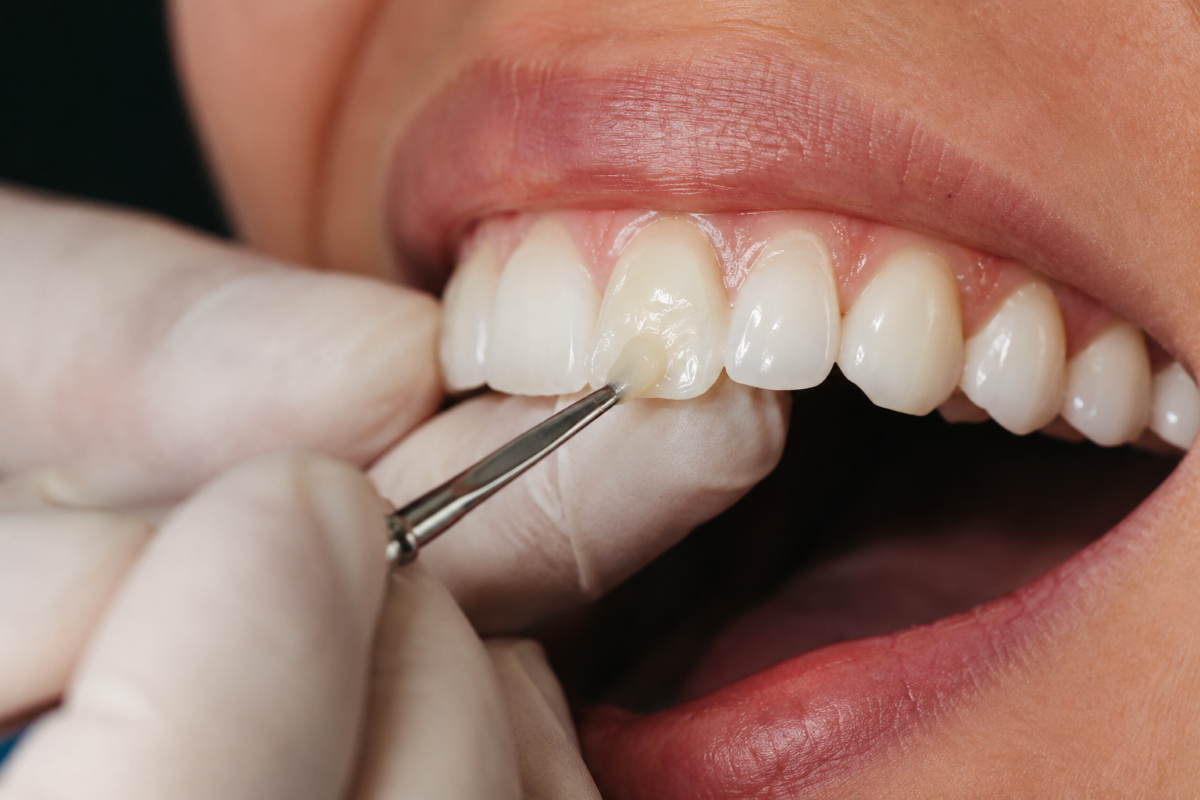
Dental bonding is a cosmetic dental procedure used to repair chipped, cracked, discolored, or uneven teeth using tooth-colored composite resin. At White Dove Dental in Milton, bonding is commonly recommended as a conservative and affordable alternative to veneers for minor smile improvements and can often be completed in a single visit.
Fast, Natural-Looking Smile Enhancements
- Repairs chipped, cracked, or uneven teeth
- Uses natural-looking tooth-colored composite resin
- Often completed in one appointment
- Requires little to no removal of healthy enamel
- More affordable than porcelain veneers
- Can improve smile symmetry and close small gaps
What Is Dental Bonding?
Dental bonding is a cosmetic and restorative treatment where a tooth-colored composite resin is applied directly to the tooth surface to improve appearance and restore minor damage.
The material is shaped carefully to blend naturally with surrounding teeth before being hardened and polished for a smooth finish.
Bonding is commonly used because it is:
- Conservative
- Minimally invasive
- Fast and convenient
- Natural looking
- More affordable than veneers
Watch: Replacing Missing Teeth
What Can Dental Bonding Fix?
Dental bonding may be recommended for:
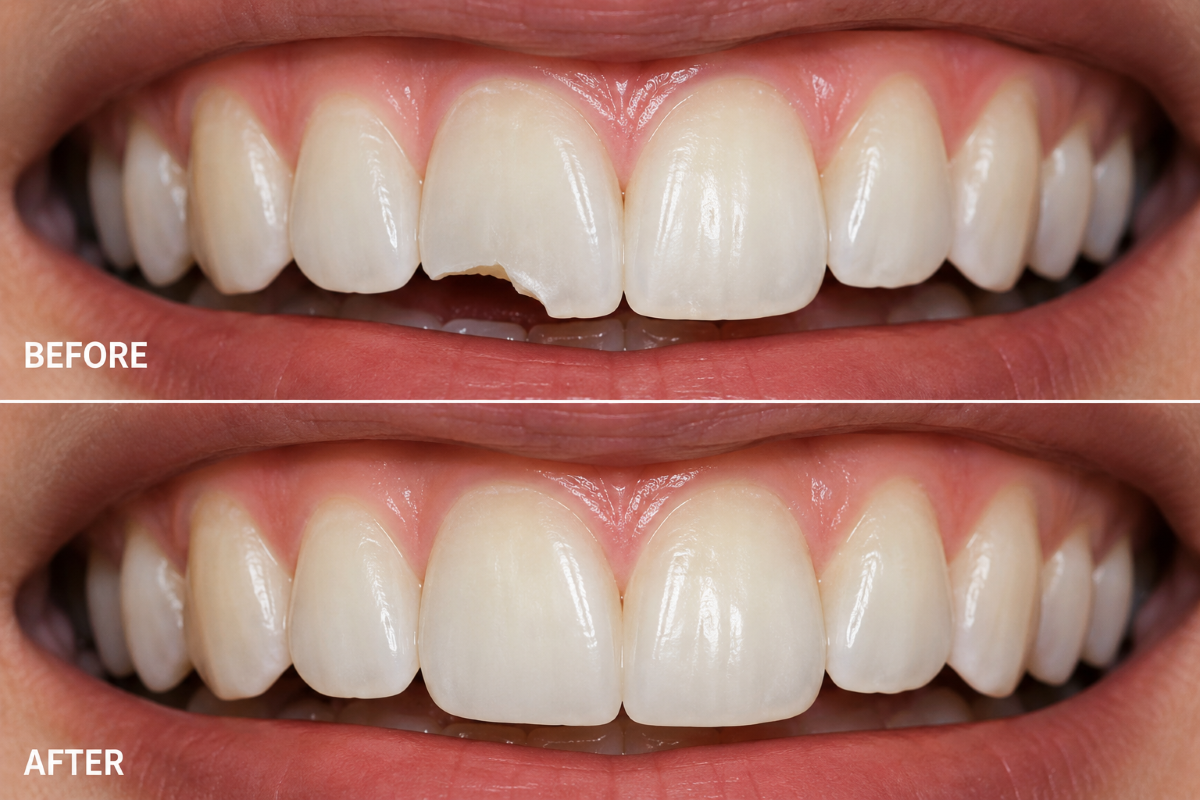
Chipped Teeth
Composite resin can restore the appearance and shape of chipped enamel.
Cracked Teeth
Minor cosmetic cracks may be repaired to improve tooth appearance and function.
Tooth Discoloration
Bonding can help mask stains or discoloration that may not respond to whitening.
Small Gaps Between Teeth
Bonding may close small spaces between teeth without orthodontic treatment.
Uneven Tooth Shape
Composite material can reshape teeth for a more balanced smile.
Black Triangles Between Teeth
Bonding may improve dark spaces near the gumline between teeth.
How Does Dental Bonding Work?
Step 1 — Consultation & Smile Evaluation
Your dentist evaluates your teeth and discusses your cosmetic goals.
Step 2 — Tooth Preparation
The tooth surface is lightly prepared to help the resin bond properly.
Step 3 — Composite Resin Placement
A tooth-colored resin is applied and sculpted carefully onto the tooth.
Step 4 — Curing the Material
A special curing light hardens the bonding material securely.
Step 5 — Final Shaping & Polishing
The tooth is polished to create a natural appearance and smooth finish.
Many bonding treatments can often be completed in a single visit.
Dental Bonding vs Veneers
| Feature | Dental Bonding | Porcelain Veneers |
|---|---|---|
| Material | Composite Resin | Porcelain/Ceramic |
| Tooth Preparation | Minimal | More Enamel Removal |
| Treatment Time | Usually One Visit | Multiple Visits |
| Cost | Lower | Higher |
| Best For | Minor Cosmetic Concerns | Larger Smile Transformations |
| Repairability | Easier to Repair | Often Requires Replacement |
Patients seeking more comprehensive cosmetic changes may also consider veneers, crowns, or a complete smile makeover.
How Long Does Dental Bonding Last?
The lifespan of dental bonding varies depending on:
- Oral hygiene habits
- Bite pressure and teeth grinding
- Diet and staining foods
- Smoking habits
- Regular dental visits
With proper care, bonded teeth may last several years before touch-ups or repairs are needed.
Is Dental Bonding Painful?
Dental bonding is generally painless because little to no natural tooth structure is removed.
Most patients do not require anesthesia unless bonding is being used to repair decay or damage near the nerve.
Who Is a Good Candidate for Dental Bonding?
Dental bonding may be ideal for patients who:
- Have healthy teeth and gums
- Want conservative cosmetic improvements
- Have minor chips, gaps, or discoloration
- Prefer a lower-cost cosmetic option
- Want faster treatment than veneers
For larger restorations or severe tooth damage, crowns or veneers may be recommended instead.
How to Care for Bonded Teeth
To help bonding last longer:
- Brush twice daily
- Floss every day
- Avoid chewing hard objects
- Limit coffee, tea, and tobacco
- Visit your dentist regularly
- Wear a night guard if you grind your teeth
Routine exams and hygiene visits help maintain bonded teeth over time.
Why Choose White Dove Dental for Dental Bonding in Milton?
White Dove Dental provides cosmetic and restorative dentistry in a welcoming, patient-focused environment.
Patients choose our clinic for:
- Conservative cosmetic treatment options
- Personalized smile planning
- Family-friendly dental care
- Modern restorative dentistry
- Clear communication and patient education
Frequently Asked Questions About Dental Bonding
Improve Your Smile with Conservative Cosmetic Dentistry
If you have chipped, uneven, or discolored teeth, dental bonding may offer a fast and minimally invasive solution. At White Dove Dental in Milton, treatment plans are personalized to help improve smile aesthetics while preserving healthy tooth structure whenever possible.
Benefits of Dental Bonding
- Natural-looking cosmetic improvements
- Often completed in a single appointment
Our team will explain all available cosmetic treatment options, including bonding, veneers, crowns, and Invisalign, to help you choose the right solution for your smile goals.